The Global North is rapidly running out of human resources, and the technocratic elite has embraced its favorite placebo: advanced automation and artificial intelligence.
Introduction: The Techno-Utopian Delusion
In Washington, Brussels, and Tokyo, policymakers have decided that as fertility rates plummet and pressures on pension systems escalate, silicon will gradually replace carbon. The premise is deceptively simple: if there are no longer enough young hands to operate factories, care for the elderly, or drive logistics vehicles, we will simply deploy robots—rather than facing the alternatives.
This thesis is not merely overly optimistic; it is macroeconomically illiterate. It treats demography strictly as a labor supply problem, willfully ignoring the fact that humans are not just units of production, but the fundamental pillars of aggregate demand—the very bedrock of the modern capitalist world.
The Production Myth vs. The Consumption Reality
Automation is highly efficient when viewed solely from a production standpoint. A robotic arm can operate a 24-hour shift without union strikes, and a large language model can process legal documentation in seconds. However, the foundational flaw of capitalism remains unresolved: someone must purchase the generated output.
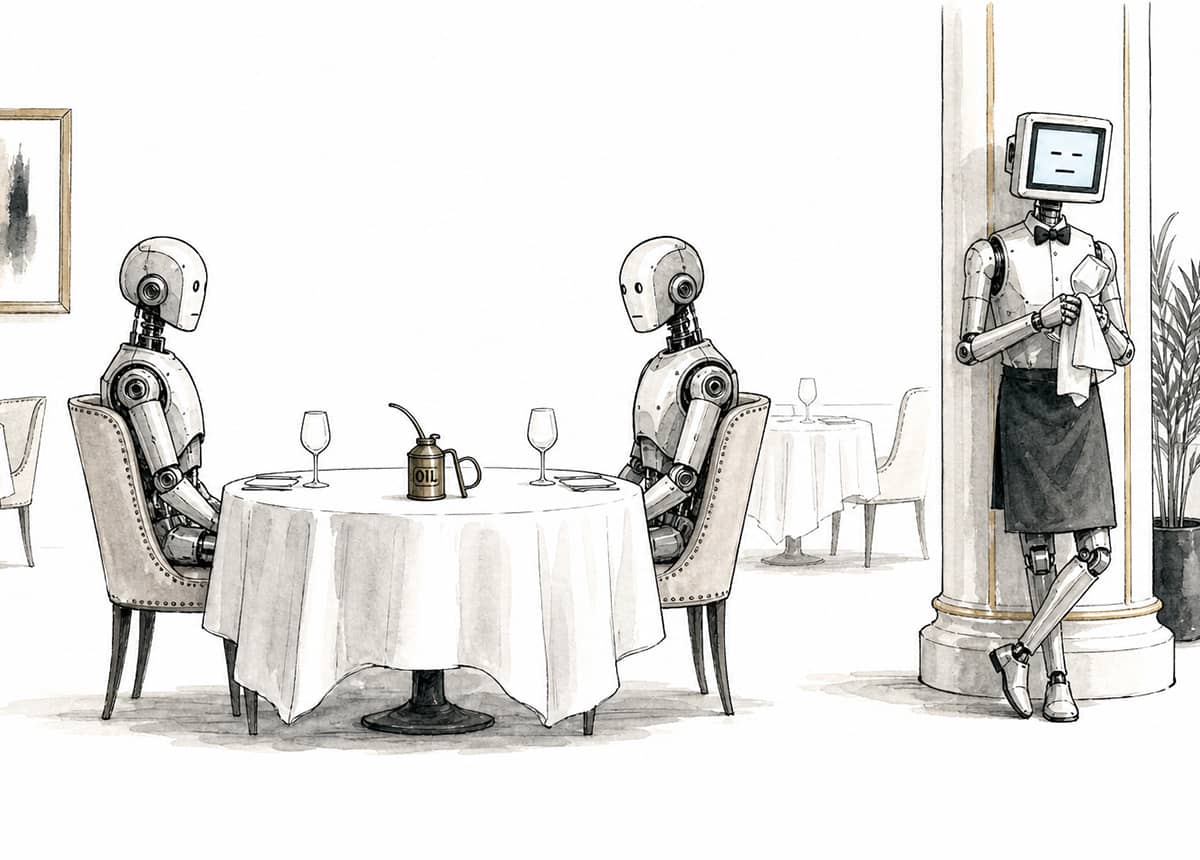
The Consumption Deficit: Robots do not purchase real estate. AI models do not pay for health insurance, buy consumer electronics, or dine out at restaurants.
The Velocity of Money: A shrinking and aging population naturally contracts overall consumption. When the youth demographic dwindles, economic growth loses momentum or halts entirely. Capital accumulation devoid of a consumer base inevitably leads to structural overproduction and systemic deflation.
The Elder Burden: An inverted demographic pyramid shifts capital expenditures away from high-multiplier sectors (housing, education, innovation) toward low-multiplier lifecycle maintenance (end-of-life care and palliative services). These are sectors where automation yields minimal returns due to an inherent shortage of emotional labor.
The East Asian Laboratory: Where Robots Fail to Reproduce
If automation were truly the antidote to demographic decline, East Asia would be economically immortal. Instead, the region has found itself on the frontline of this very collapse.
South Korea: The undisputed global leader in automation, boasting the world's highest robot density with over 1,200 industrial robots per 10,000 employees. Simultaneously, its fertility rate has stalled at a critical 0.72. Seoul has automated everything from commercial kitchens to semiconductor production lines, yet its domestic consumer market is systematically imploding. High-tech assembly lines simply cannot compensate for empty kindergartens.
Japan: The pioneer of the "silver economy." Tokyo spent decades developing advanced care-bots to lift elderly patients and automated systems to operate convenience stores. The result? Three lost decades of economic stagnation. Japan has effectively demonstrated that an automated society of seniors can maintain a baseline of civilized decline, but it remains fundamentally incapable of generating economic dynamism, let alone fueling an "AI revolution".
The Aging Dragon and the Pre-Retirement Bear: China and Russia
This structural delusion is not unique to Western-style democracies. Major Eurasian powers are also attempting to offset human capital shortages through state-driven technological pivots, yet their economic prospects face similar structural bottlenecks.
China: Beijing is aging faster than it is accumulating wealth—a direct consequence of the historical trauma left by the One-Child Policy. Confronted with a rapidly contracting workforce, the CCP is aggressively subsidizing robotics to safeguard its status as the "world's factory". However, China's economic model faces a double whammy: while production can be automated, it is impossible to automate the domestic consumer base required to pivot away from export dependency. One cannot command a drone to buy a suburban apartment.
Russia: Caught in a complex geopolitical and demographic perfect storm, Russia is dealing with a tight structural labor shortage across nearly every economic sector. The Kremlin's rhetorical and policy pivot toward digital sovereignty and domestic AI represents a calculated effort to compensate for natural population decline and optimize high-tier human capital. Yet, automating heavy industrial facilities or complex oil fields remains a significant challenge without seamless access to advanced global components. More importantly, algorithms are structurally incapable of replacing the tax-paying, consumption-driving middle class that forms the core of domestic demand.
The Central Asian Exception: The Capital of Youth
While the Global North inadvertently builds a high-tech necropolis, the geopolitical map is fracturing along demographic seams. This is precisely where Central Asia steps onto the global stage.
The region is currently experiencing a massive youth bulge—a demographic phenomenon that stands in stark contrast to the demographic decay of its northern and eastern neighbors. Countries like Uzbekistan, Kazakhstan, and Tajikistan are young, expanding, and hungry for developmental achievement.
The thesis that "automation will not save us" reveals that Central Asia is not an outdated agrarian anomaly, but rather a vital reservoir of the only resource that cannot be artificially coded: biological youth. As the Global North grays, its desperate need to sustain its pension models and vital services will ultimately force a stark choice: accept economic contraction or engage in intense geopolitical competition for Central Asian human capital. The youth of Tashkent, Astana, and Dushanbe will not be replaced by machinery; instead, they are poised to be the ones keeping the lights on in an aging, automated world.
Conclusion: A High-Tech Necropolis
The Global North is inadvertently constructing a highly automated necropolis. We are perfecting the means of production at the exact historical juncture where the ultimate purpose of production — the human consumer — is fading into irrelevance.
By treating this profound demographic crisis as a mere engineering hurdle or a simple labor shortage, policymakers are blinding themselves to the structural collapse of the capitalist market model itself. Artificial intelligence can successfully optimize economic decline, but it cannot consume the surplus. The frontier is graying, and no amount of elegant code can alter the reality that an economy without youth is an economy without a future.
Or perhaps we have simply arrived at the absolute end of the capitalist world order? Hasta la victoria siempre!