Since August 15, 2021, Afghanistan has moved from total isolation to a phase of pragmatic regional engagement.
Historical Background
While Western powers remain distant, regional actors have accepted the "Kabul reality." A landmark moment occurred on July 3, 2025, when Russia formally recognized the Islamic Emirate of Afghanistan. This shift, coupled with active trade missions—such as the Kazakh-Afghan business forums in Astana and Shymkent (yielding over $300 million in deals)—signals that Central Asia is choosing economic integration over confrontation.
Engineering vs. Reality: A "Strategic Sandbox"
The Qosh Tepa Canal stands as Afghanistan's most ambitious "self-made" project. However, its construction bypasses modern irrigation standards. Built at breakneck speed, the canal lacks concrete lining, leading to massive water losses in the sandy northern soils.
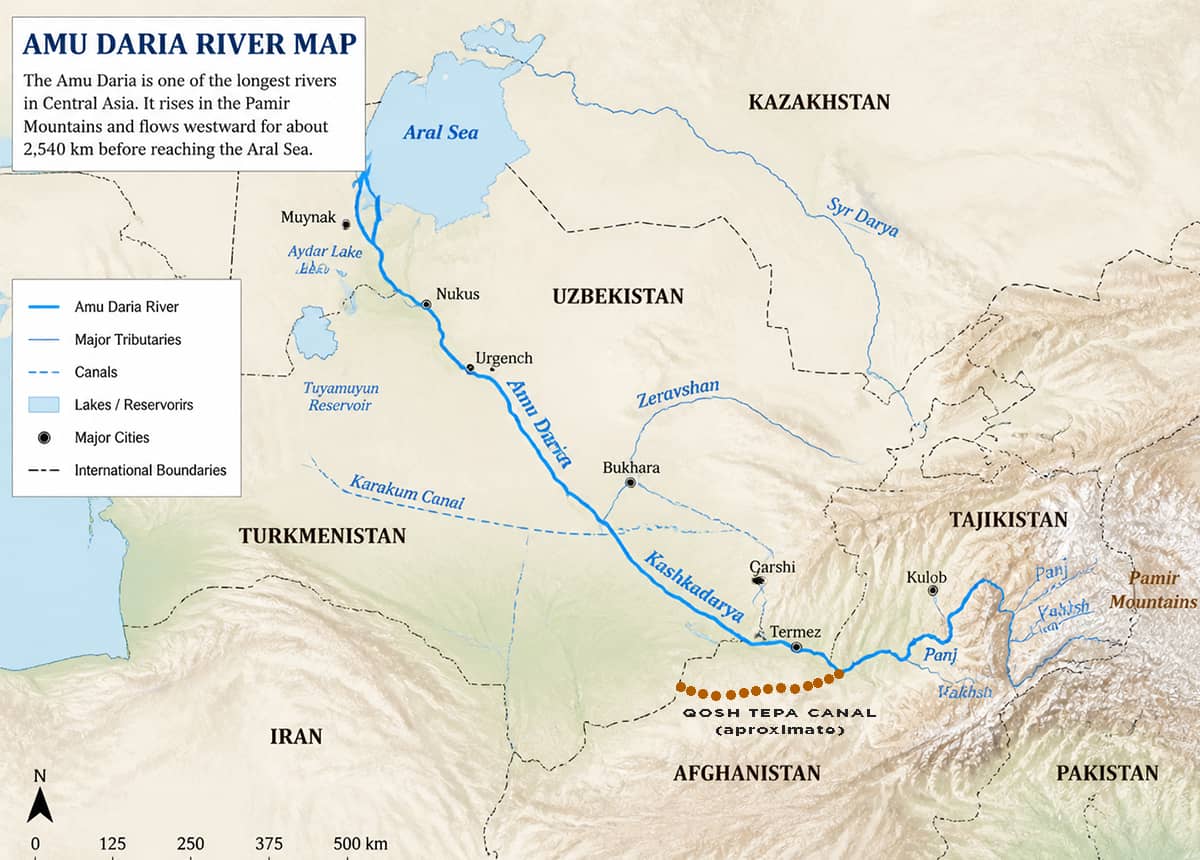
AI-generated schematic illustration
Qosh Tepa canal main data
| Parameter | Value | Geopolitical Implication |
|---|---|---|
| Total Length | 285–340 km | Consolidation of authority in northern provinces. |
| Water Intake | Up to 25% of Amu Darya flow | Potential food security crisis for downstream nations. |
| Technology | Earth-fill canal (no concrete) | 30–40% water loss via infiltration; risk of waterlogging. |
| Primary Goal | 550,000 hectares of irrigation | Mandatory transition from opium poppy to food crops. |
The Socio-Economic Pivot
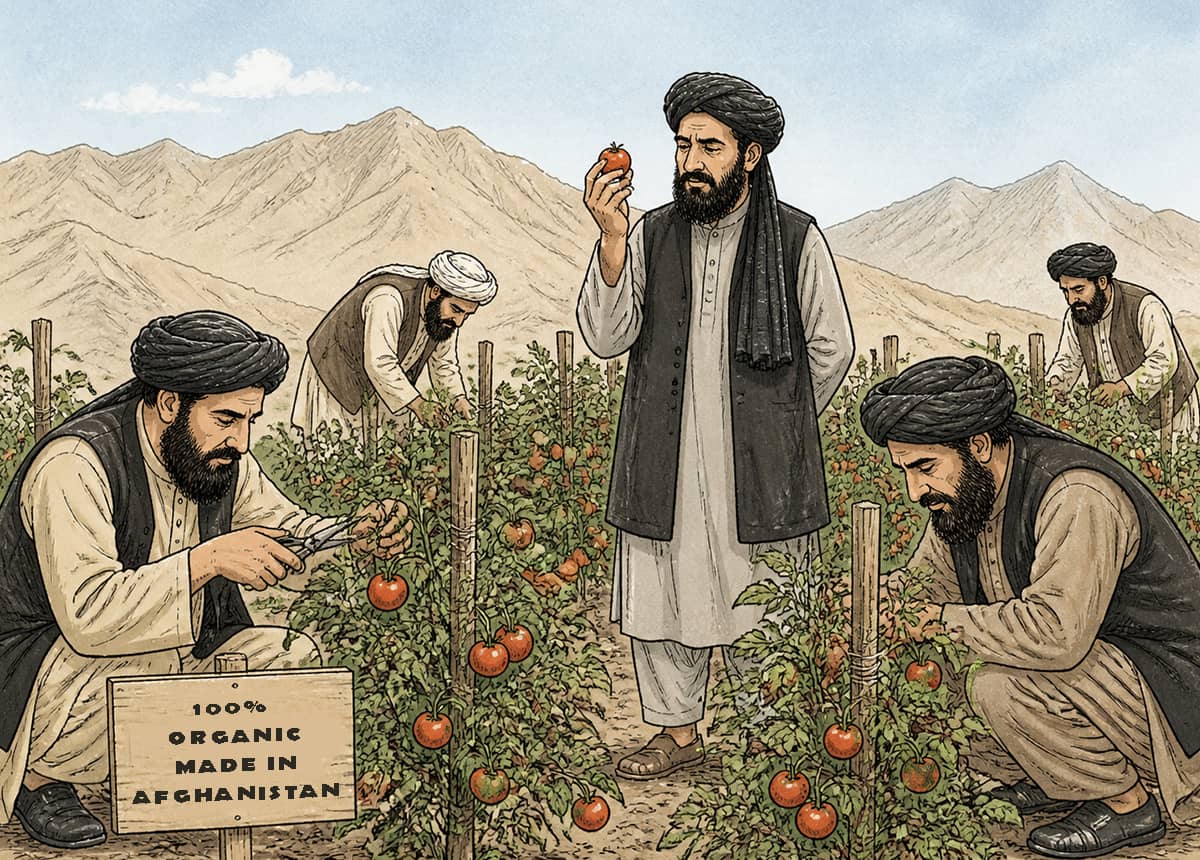
The Taliban’s* 95% reduction in poppy cultivation has left millions of farmers without a livelihood. Traditional crops like wheat and cotton require 5 to 7 times more water than poppies. For Kabul, the canal is not just an infrastructure project—it is a survival mechanism to prevent internal unrest and achieve food self-sufficiency in a semi-isolated economy.
*The Taliban movement was officially removed from Kazakhstan’s list of prohibited terrorist organizations in December 2023 to facilitate regional economic cooperation.
The Paradox of Regional Pragmatism
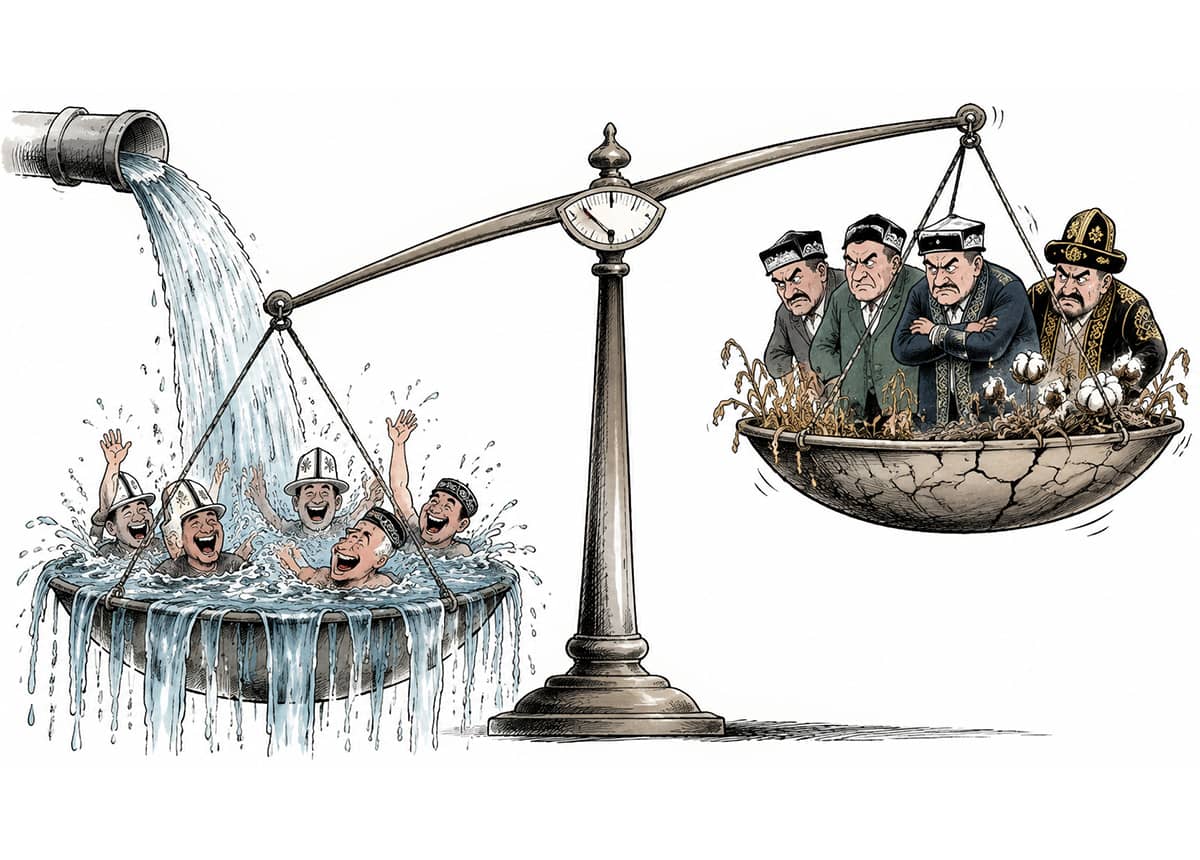
The project creates a unique "security-resource" trap where economic cooperation coexists with environmental threats:
The China Factor
Beijing's presence is visible across the project; Chinese firms are eyeing Afghanistan’s lithium and coal deposits, providing the capital that indirectly funds Kabul’s hydrological ambitions.
Uzbekistan’s Dilemma
Tashkent is forced into a balancing act. While the canal threatens the water supply of the Karakalpakstan region, Uzbekistan continues to supply electricity and technical aid to Kabul to safeguard the Trans-Afghan Railway project.
Tajikistan
Positioned upstream, Dushanbe maintains a hardline stance. While safe from immediate water shortages, it views the project as a catalyst for regional destabilization and a violation of the fragile post-Soviet status quo.
Legal Vacuum
Afghanistan is not a party to any regional water-sharing agreements or the UN Convention on Transboundary Watercourses. From Kabul's perspective, the Amu Darya is a resource they have been "under-utilizing" for decades due to war. They are now claiming their share simply because they can.
Outlook
Will they finish the canal? Most likely, yes—the first stage is done, the second is on the way, and the resources (revenue from coal and lithium) are available. The full-scale launch will result in an irreversible change to the hydrological regime of all Central Asia. Most likely, this also means the final death of any hope for the restoration of the Aral Sea. But most importantly, it marks the transition of water disputes from the realm of "ecology" to the realm of "national security."