In the 20th century, Central Asia underwent a massive, state-driven overhaul. The goal was simple: aggressive agricultural growth powered by a single, shared water and energy grid.
Fast forward to today, and that legacy is crashing into a wall of climate change and rapid population growth. The region has no choice but to completely rethink how it manages its water. Forget oil; water is the ultimate liquid asset now. When you run out of it, you cannot simply import more.
Looking Back: From Soviet Modernization to the Cold Reality
The second half of the 20th century was defined by a ruthless push to convert raw land into massive farming hubs. This required a sprawling, complex network of canals and reservoirs that permanently reshaped the region's main rivers.
Ecosystems Upended: Siphoning off water on such a massive scale triggered long-term ecological disasters. The most glaring example is the drying up of the Aral Sea—a catastrophe whose complex mix of causes is still being picked apart by scientists.
Grand Engineering Dreams: Back then, Soviet planners even toyed with the wild idea of rerouting Siberian rivers to the region. Unsurprisingly, those massive projects never left the drawing board.
The Post-Soviet Fallout: When the USSR collapsed in 1991, the centralized management model collapsed with it. The old system—which balanced fossil fuels from downstream nations in exchange for water from upstream ones—was replaced by a fragile web of bilateral and multilateral deals between newly sovereign states.
Geography of the Interfluve: Who Controls the Flow?
Today's hydropolitical map is dictated by the hard geography of the Amu Darya and Syr Darya basins. In this historical "Interfluve" (Entre Rios), water is anything but evenly distributed:
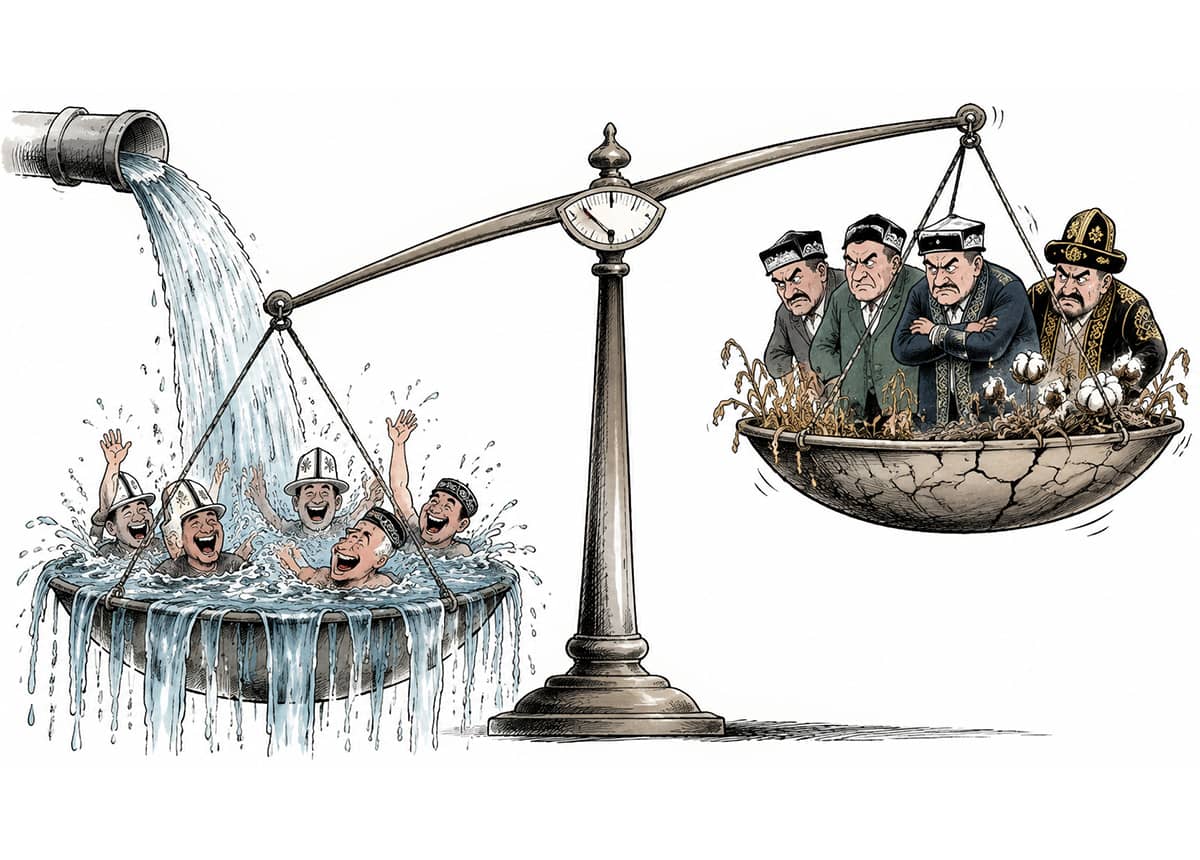
The Source (Upstream): Kyrgyzstan and Tajikistan sit on an abundance of hydropower potential. Their main goal is generating electricity, which means trapping water during the summer and dumping it downriver in the winter to keep the lights on.
The Heavy Consumer (The Heartland): Uzbekistan is stuck right in the middle of this supply chain. With a booming population and a massive agricultural sector, its demand for water is both constant and rapidly outstripping supply.
The Delta and Transit Zone (Downstream): Kazakhstan looks relatively stable for now—at least on paper and in the medium term. However, its southern regions are entirely at the mercy of cross-border flows and whatever release schedules its upstream neighbors decide to run.
Systemic Threats: More People, Less Water
The math of supply and demand in Central Asia is being squeezed by two relentless trends:
- Demographic Pressure: The population across Central Asia is growing fast. This automatically triggers a domino effect: higher domestic water use, intense strain on municipal infrastructure, and an urgent need for more crop irrigation just to ensure nobody goes hungry.
- The Climate Wildcard: Climate change is rapidly eating away at the glacier systems of the Tien Shan and Pamir mountains. In the short term, this melting might look like a blessing, temporarily boosting river flows. In the long run, however, it means irreversible depletion.
The current way the region shares its water is outdated. Without a deep modernization of its infrastructure and a swift pivot to high-tech water conservation, the regional ecosystem faces a very real threat of destabilization.