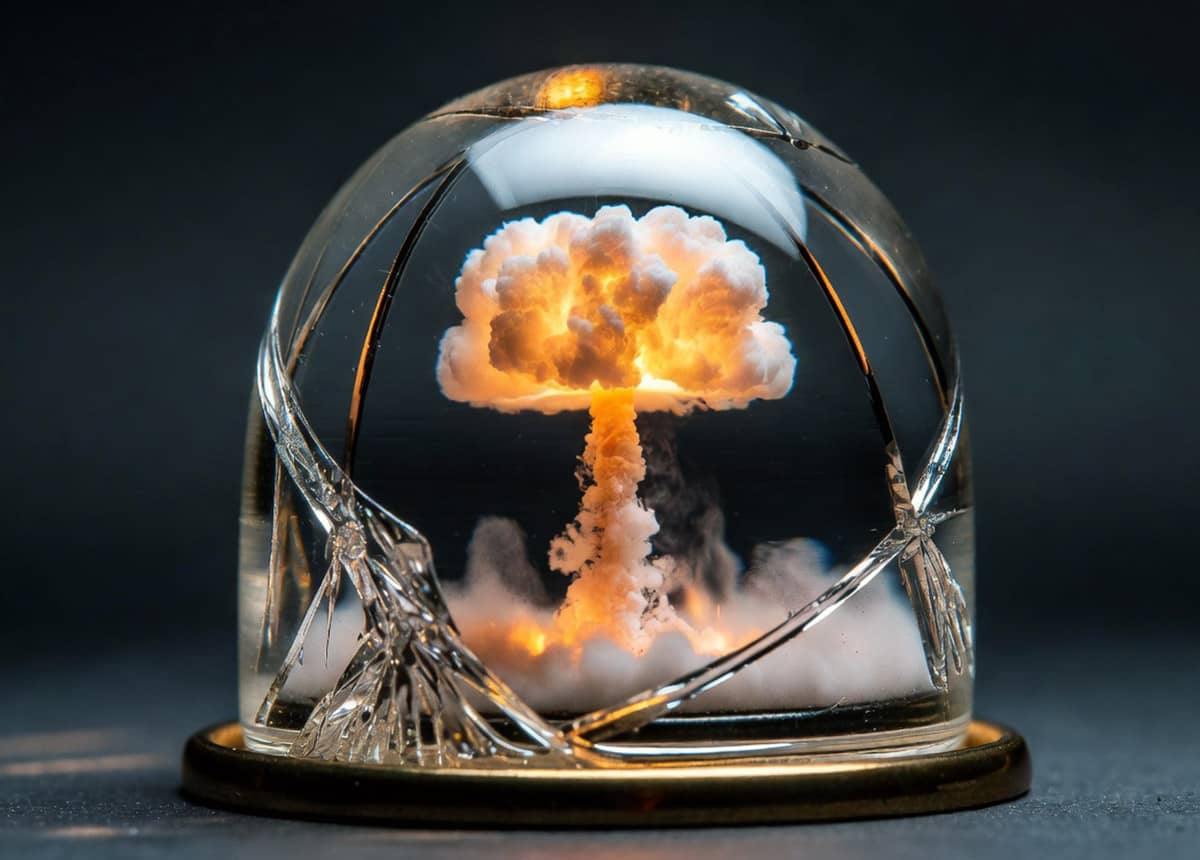
For decades, the nuclear taboo was considered the bedrock of international security. Today, we are witnessing a systemic shift in global discourse.
The Overton Window—the range of policies acceptable to the mainstream—is steadily shifting toward the normalization of nuclear weapon use. This shift is not merely rhetoric for domestic electorates; it is reshaping the cognitive frameworks of decision-makers in Moscow, Washington, and Beijing.
The Illusion of "Tactical" Partition
The most dangerous evolution in modern strategy is the artificial decoupling of tactical nuclear weapons from strategic ones. By rebranding nuclear strikes as "limited" or "non-strategic," planners create a psychological loophole.
A new logic is emerging in public discourse: If a sub-kiloton class warhead strikes a remote military hub, does it inevitably trigger a global thermonuclear exchange?
The result of such an assumption blurs the lines between conventional and nuclear warfare, transforming the unthinkable into a scalable military option.
Downplaying the Catastrophe
A new wave of analytics is challenging the 20th-century consensus on nuclear winter. Recent studies suggest that the consequences of a massive exchange between the U.S. and Russia, while catastrophic, might still be "survivable" for state structures and not necessarily terminal for the rest of the world.
This rhetoric lowers the stakes of total war from "extinction of the species" to "extreme state regression." Consequently, the deterrent power of Mutually Assured Destruction (MAD) loses its status as an absolute veto. Risk becomes a rational calculation rather than an act of suicide.
Doctrine as a "Living Document"
We are transitioning from the concept of a "retaliatory strike" to a strategy of "escalation to de-escalate." Official doctrines are becoming increasingly plastic. Recent updates to the nuclear postures of great powers indicate a readiness to use nuclear arsenals to prevent conventional defeat or to demonstrate resolve in regional theaters.
The "nuclear umbrella" is no longer a static shield; it is evolving into an active tool of coercive diplomacy.
We have entered the era of "tactical utility." The threshold for nuclear use is at its lowest level since the Cuban Missile Crisis. As the taboo fades, the international community faces a grim paradox: the more we discuss "limited" nuclear war to prevent "total" war, the more inevitable its commencement becomes.