The elections for the 9th convocation of the State Duma of the Russian Federation have concluded,
and the preliminary results are already on the analysts' desks. To an outside observer, the Russian electoral system in general, and the 2026 elections in particular, might seem like a confusing labyrinth of percentages, constituencies, and acronyms. Let us explain in simple terms how the updated Russian parliament is structured, who has gained power, and how laws will be passed from now on.
The Architecture of the Duma Election: A Game on Two Fields
The State Duma of the Russian Federation is the lower house of the Federal Assembly, representing the legislative branch of power at the federal level. While the upper house (the Federation Council) is formed by regional representatives, the Duma is a classic representative body that passes the very laws by which the country lives. There are 450 seats in the Duma. To understand how deputies get there, imagine that these seats are divided exactly in half into two baskets of 225 seats each, with each basket operating under its own rules.
STRUCTURE OF THE STATE DUMA (450 seats)
| Basket 1: Single-mandate constituencies (225 seats) | Basket 2: Party lists (225 seats) |
|---|---|
| Plurality/Majority system | Proportional representation system |
| The entire country is divided into 225 geographical districts. | Voters cast their ballots for a political party brand. |
| The winner in each district takes all. | Seats are distributed proportionally among those who clear the 5% threshold. |
| There are no run-off rounds. | Ballots cast for parties that fail to pass the threshold are discarded. |
Basket 1: Single-Mandate Districts — "The Battle of Personalities"
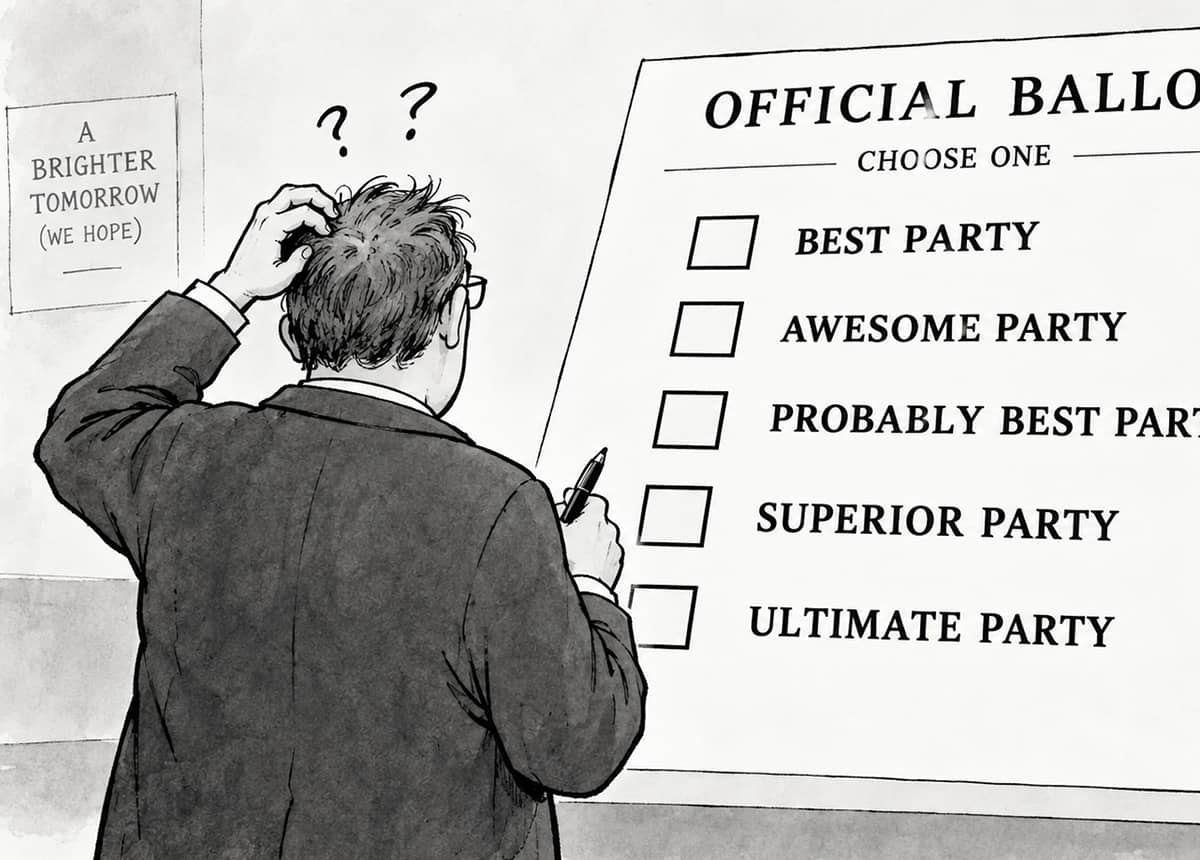
Here, everything works according to the classic first-past-the-post principle. Political parties nominate one specific candidate in each of the 225 districts. The candidate who secures at least one more vote than their rivals wins the mandate. According to preliminary data from the Central Election Commission (CEC), a total rout of the opposition took place on this field. The pro-government party, United Russia, is confidently leading in approximately 204 to 208 out of 225 districts. The remaining handful of seats are distributed among the Communist Party (KPRF, around 6 seats), A Just Russia (4), independent self-nominated candidates (4), and the Liberal Democratic Party (LDPR, 2).
Basket 2: Party Lists — "Voting for the Brand"
In this basket, citizens voted for a political party rather than an individual. The mechanism is more complex: first, all parties that fail to secure 5% of the vote are filtered out. Then, the remaining 225 seats are mathematically divided among the winners proportional to their results. With United Russia capturing approximately 57.7% of the vote, the party takes the lion's share of the list-proportional pie—around 125 seats. The rest is shared by the KPRF, LDPR, and the New People party, who also cleared the barrier. A curious detail: A Just Russia — For Truth is balancing on the razor's edge of the 5% threshold according to preliminary counts (around 4.99%), risking being left with no party-list seats at all and relying solely on its four single-mandate winners.
The Total Breakdown: What is a "Supermajority"?
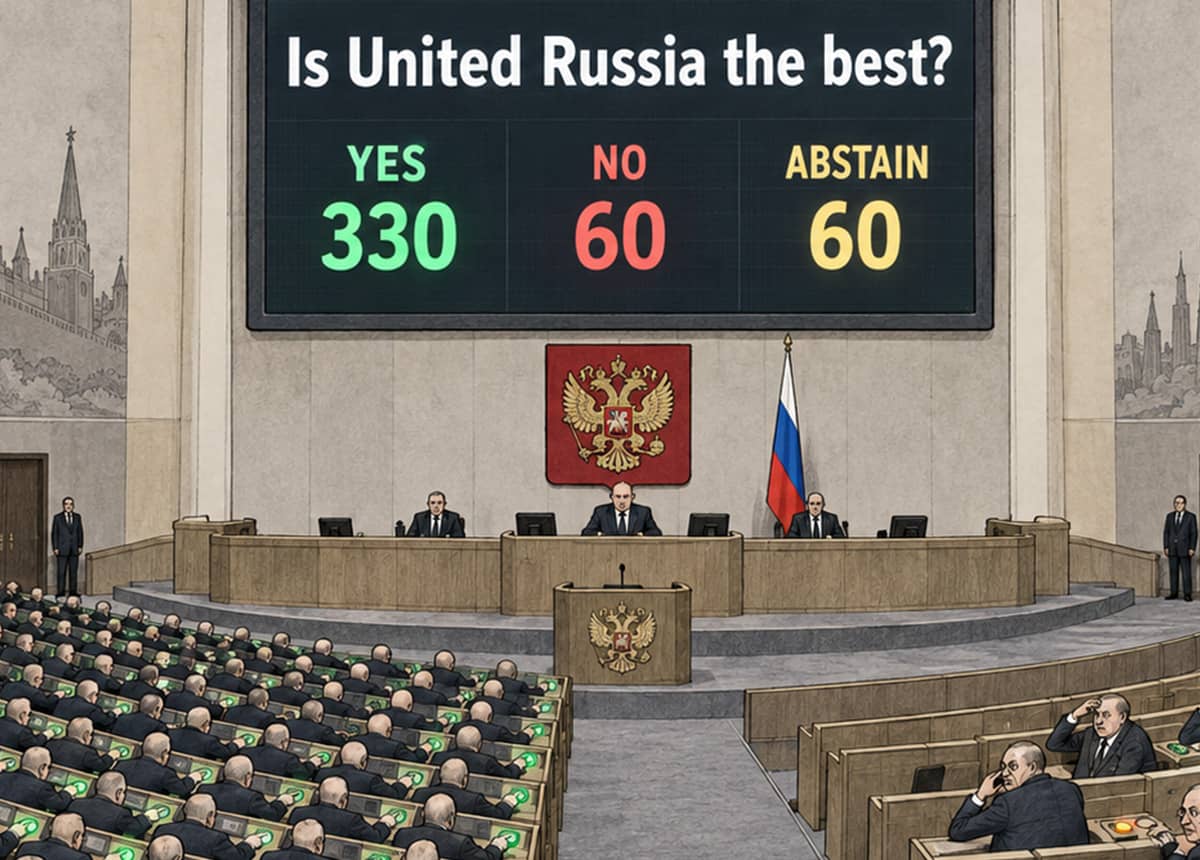
When combining the results from both baskets, United Russia receives a total of around 330 out of 450 seats. In political science, this threshold is called a constitutional (or qualified) majority (which requires more than 300 mandates). This represents an absolute concentration of parliamentary power.
How It Works in Practice: The Anatomy of Voting
The main question for any voter is: "How do these numbers matter when the deputies take their seats?" The answer lies in the simple arithmetic of decision-making. Four key points can be highlighted here:
- Ordinary Laws (226 votes required). This includes the federal budget, taxes, amendments to the Criminal Code, and most everyday rules of the country. Since United Russia holds roughly 330 votes, they can pass any ordinary law completely on their own. They have no structural need to negotiate, compromise, or form coalitions with other factions. If the party presses the "YES" button, the law is passed.
- In theory, a rigid monolith does not exist. Naturally, within a faction as massive as United Russia, there are always internal interest groups representing different economic sectors or regions. Intense debates occur at the committee stage long before a bill reaches the plenary session. However, when it comes to the final vote, strict party discipline is enforced. Instances of a deputy voting against the faction's decision are extremely rare, as the party brand remains the primary political capital for each individual.
- Constitutional Laws (300 votes required). This refers to amending the Constitution itself or overriding a veto by the upper house of parliament (the Federation Council). Possessing 330 mandates, the ruling party is capable of modifying the country's fundamental law without looking back at anyone else.
- The Role of the Opposition (KPRF, LDPR, New People). Under this arrangement, the systemic opposition effectively transitions into an expert lecture forum. They can use the parliamentary podium for professional opposition, criticize bills in the media, or introduce alternative drafts. However, they lack the mathematical capability to actually block a decision by the majority. Their primary function now is to refine proposed initiatives, point out flaws, and thereby enhance the overall quality of legislation.
The people united will never be defeated
The new composition of the Russian State Duma signifies absolute predictability and continuity of the current course. The legislative branch in Russia remains consolidated around the presidential course, and any international agreements or domestic reforms will be approved by the majority faction without delays or intra-parliamentary crises.
The 2026 elections convincingly demonstrated a deep consolidation of Russian society. Despite external pressure, economic challenges, and local logistical or fuel difficulties, the voter demonstrated colossal support for the ruling party. In their mass, people voted not for a party program, but effectively in support of the course of the President of the Russian Federation. It is no coincidence that as its campaign slogan, "United Russia" used a slightly rephrased line from Sergio Ortega's famous song.