
External observers frequently perceive the political architecture of Central Asia as a monolith.
The Political Mosaic of Central Asia: A Comparative Analysis
However, de jure political institutions and de facto governance mechanisms across the region operate on starkly different planes. Kazakhstan has traditionally served as the primary testing ground—or, if you prefer, the trendsetter—for controlled institutional engineering.
The following matrix provides a systemic breakdown of regional governance, capturing Kazakhstan before and after its pivotal 2026 restructuring:
| Country | Official System (De Jure) | Real Mechanism (De Facto) |
|---|---|---|
| Kazakhstan (Pre-2026) | Presidential republic with a bicameral Parliament (Senate and Mazhilis). | A super-presidential system where regional elites are tightly filtered through the Senate. |
| Kazakhstan (Post-2026) | Unicameral Kurultai with advanced multi-party representation. | An ultra-consolidated vertical structure powered by a rapid-fire legislative assembly. |
| Uzbekistan | Presidential republic with a bicameral Oliy Majlis. | Managed technocratic modernization balanced by absolute state control over the political arena. |
| Kyrgyzstan | Presidential republic (formerly parliamentary). | A pendulum system oscillating between chaotic parliamentarism and reactive presidential rollbacks. |
| Tajikistan | Presidential republic. | A rigid, highly personalized power vertical where governance has remained effectively frozen since the 1990s. |
| Turkmenistan | Presidential republic with a unicameral Halk Maslahaty. | Dynastic absolutism wrapped in decorative institutions of civic rubber-stamping. |
Unicameral Mutation: The Kurultai Experiment
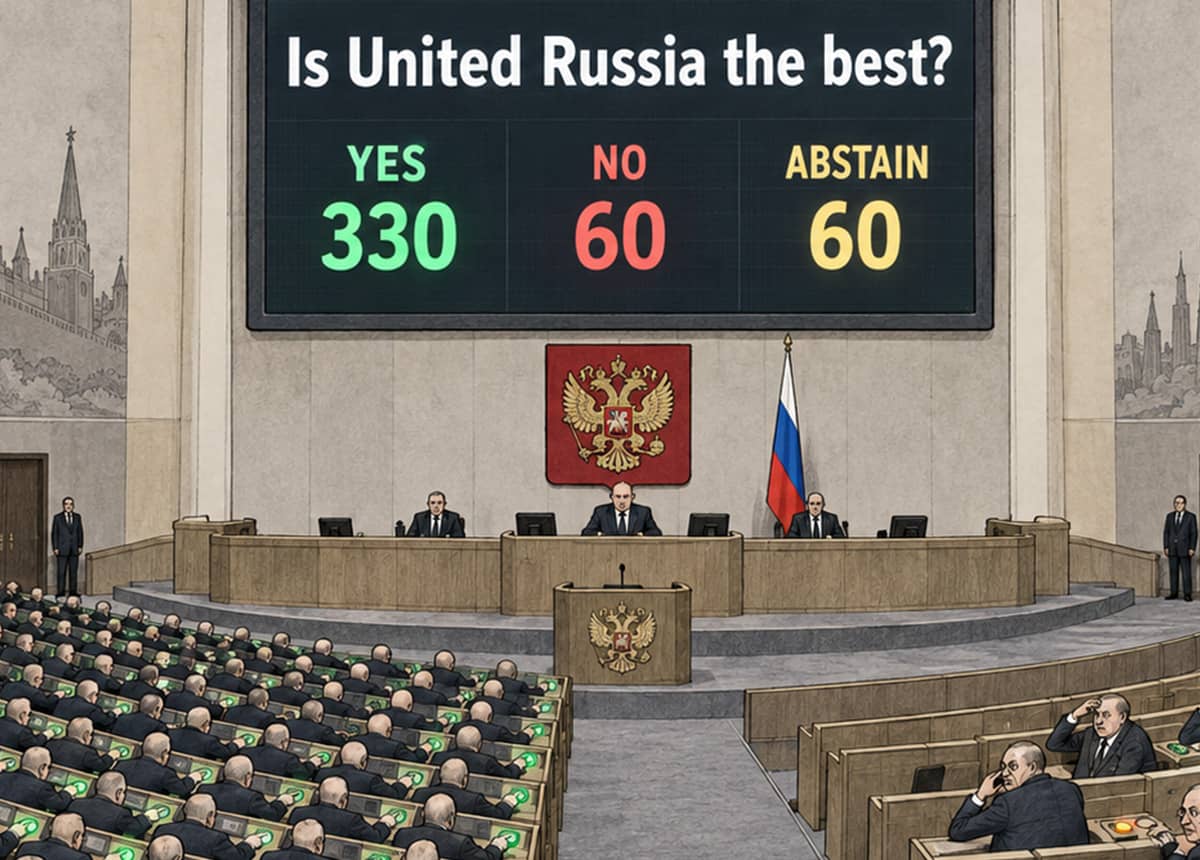
Kazakhstan’s shift from a classic bicameral framework to the unicameral Kurultai in 2026 is no mere rebranding. It represents a radical overhaul of the state machinery.
The Anticipated Upsides:
The Death of Bureaucratic Inertia: Abolishing the Senate puts an end to the endless ping-pong of draft bills between chambers. The speed of legislative output in times of crisis skyrockets.
Austerity and Centralization: This shift brings a direct reduction in spending by trimming down a bloated legislative body and streamlining administrative logistics.
The Illusion of Direct Plebiscite: Rebranding the house as the "Kurultai" allows the state to market the transition as a return to historical roots and an unmediated dialogue with the populace.
Systemic Risks and Hidden Pitfalls:
Loss of the "Elite Brake": The Senate historically acted as a pressure valve, dampening regional friction and filtering half-baked legislation. Without it, the regime loses its institutional shock absorber..
The Bottleneck Effect: Responsibility and social blowback are now funneled into a single chamber. If the economy takes a hit, the regime can no longer blame factional infighting—the public grievance will target the very top of the vertical.
The August 2026 Verdict: Forecasts vs. Reality
The parliamentary elections held on August 23, 2026, offered a clear look at this revamped machinery in action. The consolidation of establishment resources into the mega-party "Adilet" (meaning "Justice," which absorbed the former ruling party "Amanat") predetermined the outcome, rendering the "Just Choice" inevitable.
| Party / Metric | Expert Forecasts | Real Election Results (August 2026) | Systemic Status |
|---|---|---|---|
| Total Turnout | 55–60% (voter apathy and summer vacation) | 74.08% | A display of absolute state mobilization. |
| "Adilet" (Justice) | 60–65% (a guaranteed majority) | 71.17% (6,528,948 votes) |
Absolute monopolist; the core of the new Kurultai. |
| "Auyl" | 6–8% | 6.26% (574,621 votes) |
Loyal agrarian satellite. |
| "Respublica" | 5–7% | 5.56% (509,631 votes) |
Controlled safety valve for pro-regime business and youth. |
| "Ak Zhol" | 5% (on the verge of elimination) | 5.21% (478,083 votes) |
Nomenklatura-linked business sector. |
| "NSDP" | 3–5% (predicted to fail) | 5.11% (469,058 votes) |
Curated social-democratic "opposition". |
| "Against All" | — | 2.51% (230,446 votes) |
Institutionalized metric of passive protest. |
| People's Party (NPK) | 4–6% | 3.11% (285,395 votes) — Failed |
Former systemic fixture pushed outside the parliamentary perimeter. |
| "Baytak" (Greens) | ~1.5% | 1.07% (97,751 votes) — Failed |
Minor eco-satellite demonstrating marginal mobilization capability. |
By forging a frictionless Kurultai and packing 71% of it with "Justice," Astana has successfully sealed its political perimeter. Yet, in an era of unpredictable domestic and external shocks, a hermetically sealed system offers very little room to bend before it breaks.